WORKSHEETS
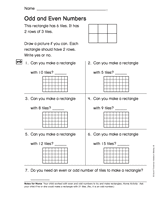
Using a set number of tiles, students must mentally determine whether they can construct a rectangle.
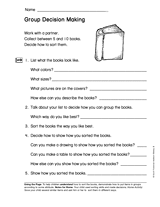
Students describe a set of books and determine the best way to sort them.
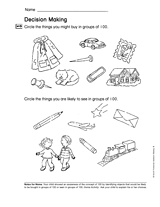
Students show an awareness of the concept of 100 by completing this worksheet.
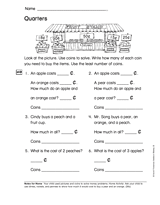
Students attempt to use the least number of coins to make a purchase.
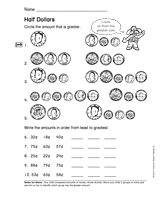
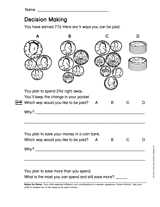
Students find the group of money with the greatest value.
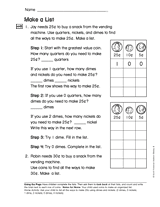
Students try to make up the same value of money through different sets of coins.
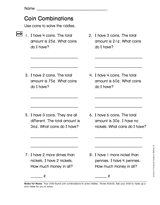
Given a set number of coins and a monetary value, students must determine which coins are contained in the group.
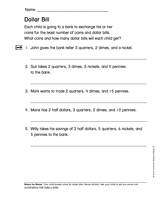
Students convert money to the smallest number of bills and coins.
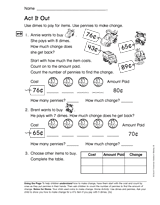
Students practice making change after a purchase.
Distribute this packet of worksheets to provide practice in understanding money.
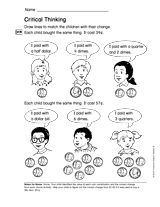
Students identify the value of coin combinations and solve problems by making change.
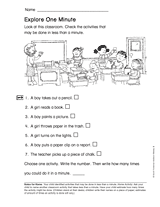
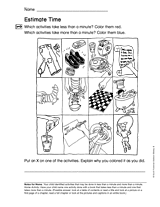
Students mark the activities that can be completed in less than one minute.
Students estimate how long it takes to complete various activities.
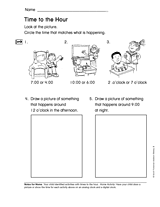
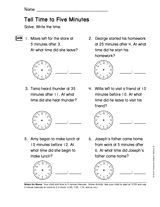
Students must determine the time when an event occurs.
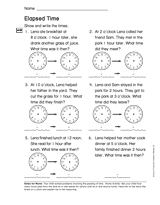
Students must determine at what times a character begins and ends an activity.
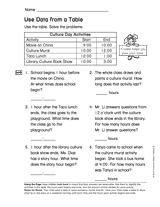
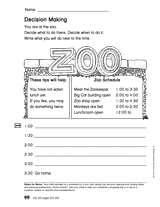
Students use time data from a table to solve schedule questions.
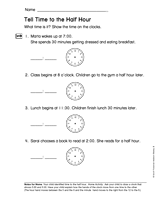
Given a relative time, students must fill in the hands on a clock face.
Students represent time by drawing hands on clock faces.
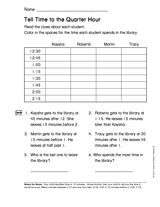
Using clues, students determine how much time various characters spend in the library.
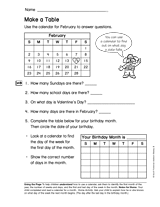
Students explore working with a calendar, reading dates, and finding their birthday.
Distribute this packet of worksheets to help students develop skills in telling time and scheduling.
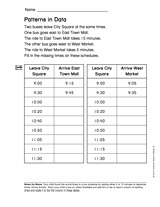
Students find the arrival times in a bus schedule by adding either 5 or 15 minutes to departure times.
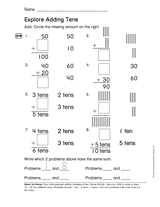
Students explore adding multiples of ten.
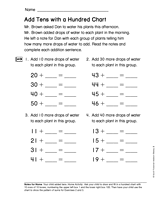
Students practice addition with multiples of ten.