WORKSHEETS
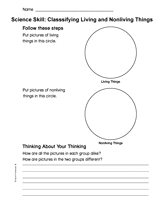
Students draw and classify pictures of living and nonliving things.
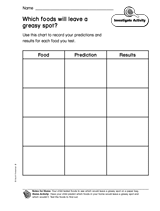
Students test foods to see which will leave a greasy spot on a paper bag.
Students draw and write about how they get exercise each day.
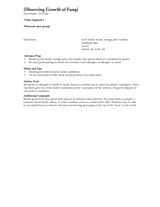
Students observe the growth of fungi. Materials list, rubric, worksheets, and answer key are provided.
Students investigate the frequency of gene and trait inheritance by making a model. Materials list, rubric, worksheets,…
Students explore how a moth's coloring protects it from being seen in its habitat. Materials list, rubric, worksheets,…
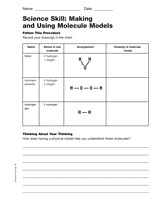
Students make models of molecules that contain hydrogen and oxygen atoms, and answer questions about working with…
ACTIVITIES
Students write a hypothesis and design an experiment to test it.
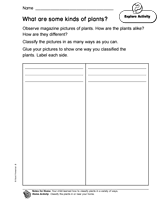
Students learn how to classify plants in a variety of ways.
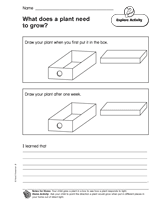
Students grow a plant in a box to see how a plant responds to light.
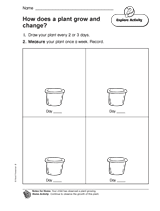
Students observe a plant growing.
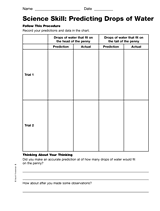
Students predict how many drops of water will fit on a penny, and then test their prediction.
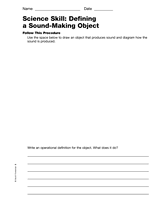
Students write an operational definition of a sound-producing object.
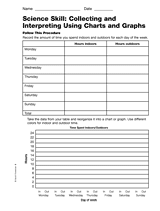
Students collect and interpret data on how much time they spend indoors and outdoors.
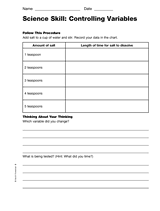
Students test the length of time varying amounts of salt take to dissolve in water.
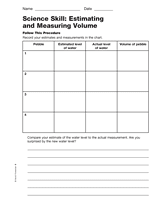
Students estimate the level to which water will rise in a cylinder when various pebbles are placed in the water.
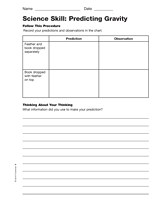
Students make predictions about the rate at which a book and a feather will fall to the ground, then conduct an…
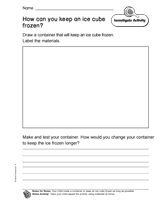
Students make a container to keep an ice cube frozen as long as possible.
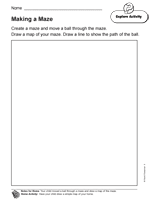
Students move a ball through a maze and draw a map of the maze.
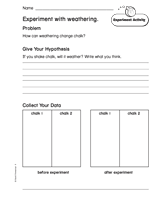
Students perform a weathering experiment to see what happens when chalk is shaken in a container.
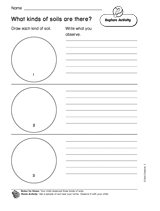
Students observe three kinds of soils, make drawings, and write about them.
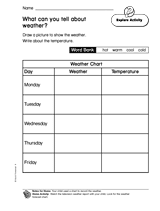
Students use a chart to record the weather.
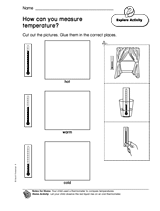
Students cut out pictures and glue them next to the appropriate temperature.
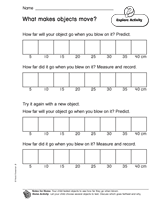
Students predict and test how far objects will move when blown on.