WORKSHEETS
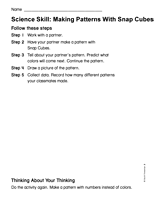
Partners take turns making patterns with Snap Cubes.
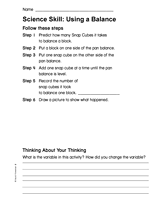
Using a pan balance, students test the number of Snap Cubes it takes to balance a block.
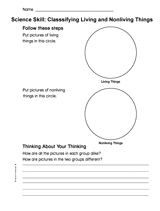
Students draw and classify pictures of living and nonliving things.
ACTIVITIES
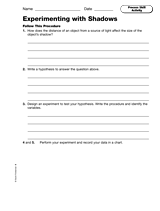
Students write a hypothesis and design an experiment to test it.
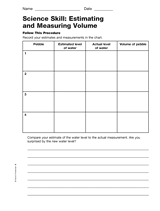
Students estimate the level to which water will rise in a cylinder when various pebbles are placed in the water.
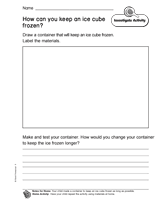
Students make a container to keep an ice cube frozen as long as possible.
Students move a ball through a maze and draw a map of the maze.
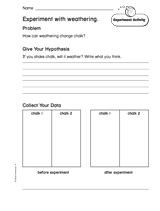
Students perform a weathering experiment to see what happens when chalk is shaken in a container.
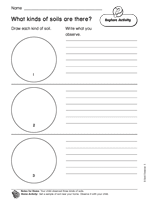
Students observe three kinds of soils, make drawings, and write about them.
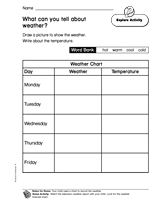
Students use a chart to record the weather.
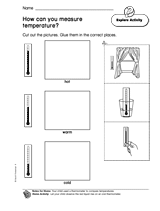
Students cut out pictures and glue them next to the appropriate temperature.
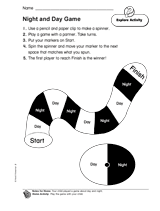
Students play a game about day and night.
Students explore different materials found in soil. Materials list, rubric, worksheets, and answer key are provided.
Students learn about an owl's niche in its ecosystem by studying owl pellets. Materials list, rubric, worksheets, and…
Students observe and classify different materials. Materials list, rubric, worksheets, and answer key are provided.
Students build a pendulum and experiment with its motion. Materials list, rubric, worksheets, and answer key are…
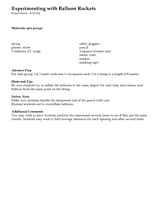
Students experiment to determine how far a balloon rocket will travel. Materials list, rubric, worksheets, and answer…
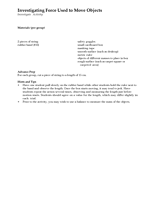
Students measure the force needed to move objects of different masses across smooth and rough surfaces. Materials list,…
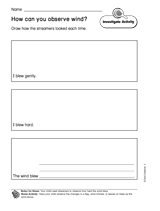
Students blow on streamers to observe wind.
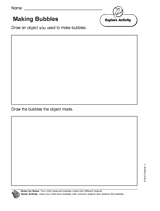
Students observe bubbles made with different objects.
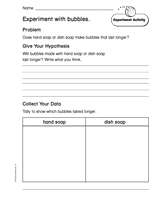
Students perform an experiment to see which type of bubbles last longer: those made with hand soap or those made with…
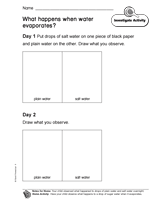
Students observe what happens to drops of plain water and salt water overnight.
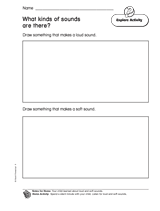
Students draw things that make soft sounds and things that make loud sounds.
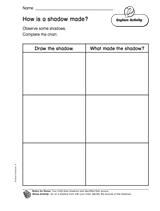
Students draw shadows and identify their source.